
Portfolio Projects That Convince UK Employers You Can Code
Eddie Lewis
A hiring manager in Manchester or Leeds who opens your portfolio link is not grading you on ambition. They want proof that you can build something which works, finish what you start, and explain your decisions out loud. The right portfolio projects demonstrate skills, creativity and problem-solving ability to employers and clients, and a well-built portfolio site remains one of the simplest ways to impress the person doing the shortlisting. What follows is a practical set of projects, each chosen because it proves a different part of the job, plus notes on presenting them so a recruiter keeps reading past the first link.
What a portfolio has to prove before anything else
Three things, in this order: that it runs, that you built it, and that you can talk about it. A broken demo link ends the conversation before your code gets a look. Once a reviewer can click through a working site, they move on to the repository, scan the commit history, and ask whether the project solves a real problem or simply repeats a tutorial.
That is why a small number of finished, working projects beats a long list of half-built experiments. Four or five solid entries with live demos and readable code will do more for you than fifteen abandoned repositories. Choose projects you can finish in a few weekends, then polish them properly.
Project one: a multi-page responsive website
A multi-page responsive website is the foundation project, and it appears on almost every list of portfolio ideas for good reason. Build four or five connected pages, get the navigation working at every screen size, and make sure the layout holds together on a phone as well as a desktop.
Semantic HTML, a tidy stylesheet structure and a working contact form will serve you better than an ambitious animation. This is where you show the basics every employer assumes you have: markup, layout, accessibility fundamentals and an eye for spacing. Keep the files organised, name things sensibly, and write a short README explaining how the site is put together.
Project two: an application with a real database behind it
Front-end work shows you can build a page. A database-backed application shows you can build a system. A small PHP and MySQL project, such as a booking form, a searchable recipe collection or a simple inventory tracker, proves you understand data modelling, form validation, sessions, and the difference between what the browser displays and what the server stores.
Employers hiring for full stack roles need to see this, because styling a card component is not the same skill as explaining a table relationship. Keep the scope tight. Three tables and a working login will impress more than a sprawling project that never quite loads.
Project three: a React front end that consumes an API
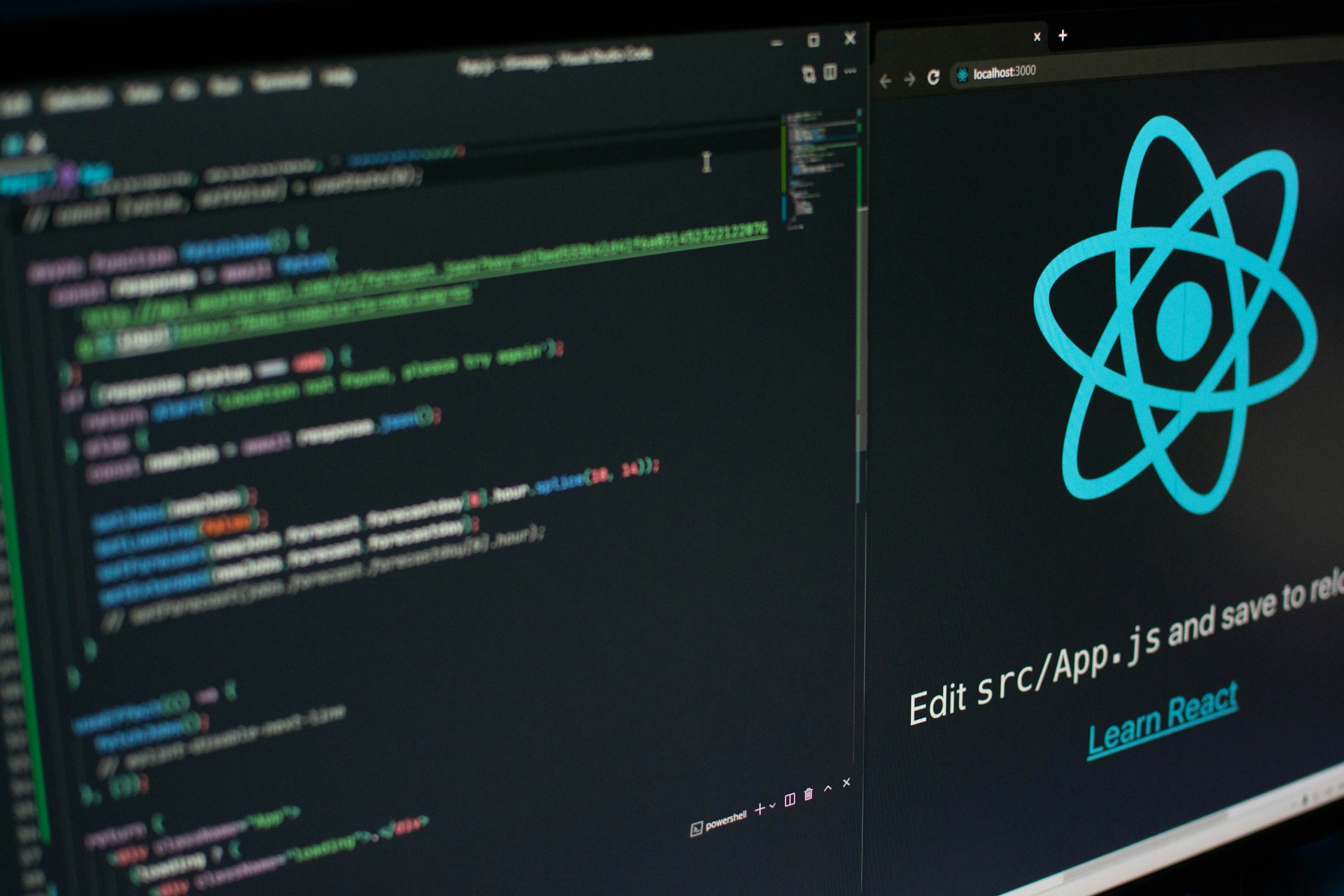
React plus an API is the combination that appears repeatedly in junior and mid-level developer roles. Build something that fetches JSON from a public API, renders it through components, and handles loading and error states properly. A weather dashboard, a film search tool or a currency converter all work well.
The detail that separates a strong project from a tutorial repeat is failure handling. What happens when the request times out, when the search returns nothing, or when the user types faster than the responses arrive? Those decisions belong in your README. Pairing a React front end with a Symfony or PHP API of your own gives you a full stack story to tell in an interview.
Project four: a small JavaScript game or interactive tool
Small JavaScript builds, such as a calculator, a quiz, a to-do app or a simple browser game, are underrated. They are small enough to finish and fiddly enough to be interesting. A calculator forces you to manage input state and edge cases. A game forces you to think about timing, loops and resetting state cleanly.
These are the projects you can walk an interviewer through line by line in ten minutes, which is roughly what junior technical conversations look like in practice. The free five-day taster at Code Success builds a to-do list app with HTML, CSS and JavaScript for exactly this reason: it is a complete, demonstrable thing rather than a fragment.
Project five: a redesign with a written rationale
Redesigning an existing website template is a recognised portfolio project that removes the pressure of inventing a concept and puts the focus on judgement. Take a template, identify what fails, and rebuild the layout with your own markup and styles.
Then write 300 words explaining what you changed and why. Add before and after screenshots so the reviewer does not have to take your word for it. This is the entry that demonstrates communication, and communication is half of what a hiring conversation actually tests.
Which project proves which skill
| Project | Skill it demonstrates | What to include in the repo |
|---|---|---|
| Responsive multi-page site | HTML, CSS, layout, accessibility basics | Live link, screenshots, note on responsive breakpoints |
| PHP and MySQL application | Data modelling, validation, server-side logic | Database schema, setup steps, sample data |
| React and API front end | Components, state, JSON handling, error states | API used, loading and error handling notes |
| JavaScript game or tool | DOM handling, logic, edge cases | Short walkthrough of the trickiest function |
| Template redesign | Judgement, design thinking, written reasoning | Before and after images, rationale write-up |
How to present a project so a recruiter keeps reading
Presentation is where most portfolios lose marks, not the code. A reviewer gives each project a minute at most, so make that minute easy.
- Put the live demo link at the top of the README, not buried at the bottom.
- Add a screenshot so the project can be assessed without leaving GitHub.
- State the stack in one line, then explain what the project does in two or three.
- Include clear instructions for running it locally, with any environment variables listed.
- Finish with a short section on what you would improve next and what the known limitations are.
- Write commit messages that describe the change rather than saying "update".
That final point about limitations does more than it looks. Naming what is unfinished shows self-awareness and stops an interviewer from finding the gap themselves at the worst possible moment.
Mistakes that undermine an otherwise good portfolio
The common failures are predictable. A project that only runs on your machine, a repo with a single commit called "final", a README copied from the tutorial, a demo link that returns a 404, or eight projects where none has been touched since the first week of learning. Each one signals that you start things and do not finish them, which is the opposite of what a hiring team wants.
Broken links are worse than missing ones, so check every URL on your portfolio site before you send an application. If a project is no longer deployed, either redeploy it or remove it from the featured list and keep it in a separate archive section.
Building these projects on a self-paced route
If you are learning around a job, the hardest part is knowing which projects to build and in what order. A structured course helps because the project sequence is already mapped to the skills employers screen for. The Code Success Full Stack Developer Course covers HTML, CSS, JavaScript, PHP, MySQL, ReactJS, Symfony, and XML, JSON and APIs across nine months of self-paced study, with human mentors, an AI assistant and a Slack community for support, plus job placement assistance through UK recruitment agencies.
Whatever route you take, keep a running list of project ideas and finish them one at a time. A portfolio is not a museum of everything you have tried. It is evidence that you can build, ship and explain, and five well-presented projects will carry you further than fifty sketches.
Frequently Asked Questions
How many projects should a coding portfolio have?
Four to six finished projects is a sensible target for a first developer role. Quality matters more than quantity, so prioritise entries with a live demo, a readable repository and a short write-up explaining your decisions. If you have more than six, feature your strongest on the portfolio site and keep the rest in an archive section at the bottom.
Do I need a portfolio website, or is GitHub enough?
A portfolio site is worth building because it gives you control over the order a reviewer sees things in and lets you add context that a repository cannot. GitHub is still essential, since employers will want to read your code. Use the site as the entry point and link each project through to its repository and live demo.
Can I include tutorial projects in my portfolio?
Only if you change them meaningfully. A straight clone tells an employer nothing about how you think. Take the tutorial's structure, then add your own feature, redesign the interface or rebuild the logic in a different way, and say clearly in the README what was guided and what was yours.
What if my project is not deployed live?
Deploy it if you possibly can, because a clickable demo removes all doubt. If deployment is genuinely not possible, add screenshots or a short screen recording, include exact setup instructions and explain in the README why it runs locally only. Never leave a dead demo link in place of an honest explanation.
Do UK employers care more about projects or qualifications?
For entry-level developer roles, working evidence of your ability usually carries the most weight, particularly when your background is not a computer science degree. Qualifications and course completion help you get past initial screening, but the portfolio is what convinces an interviewer that you can do the job. Check individual job adverts for any specific requirements.
Share this article
About the author
Eddie Lewis
I'm Eddie, and I'm the Top Dog at Code Success. When I'm not coding and creating online courses, I spend time with my family, wood working and maybe playing the drums every now and again.